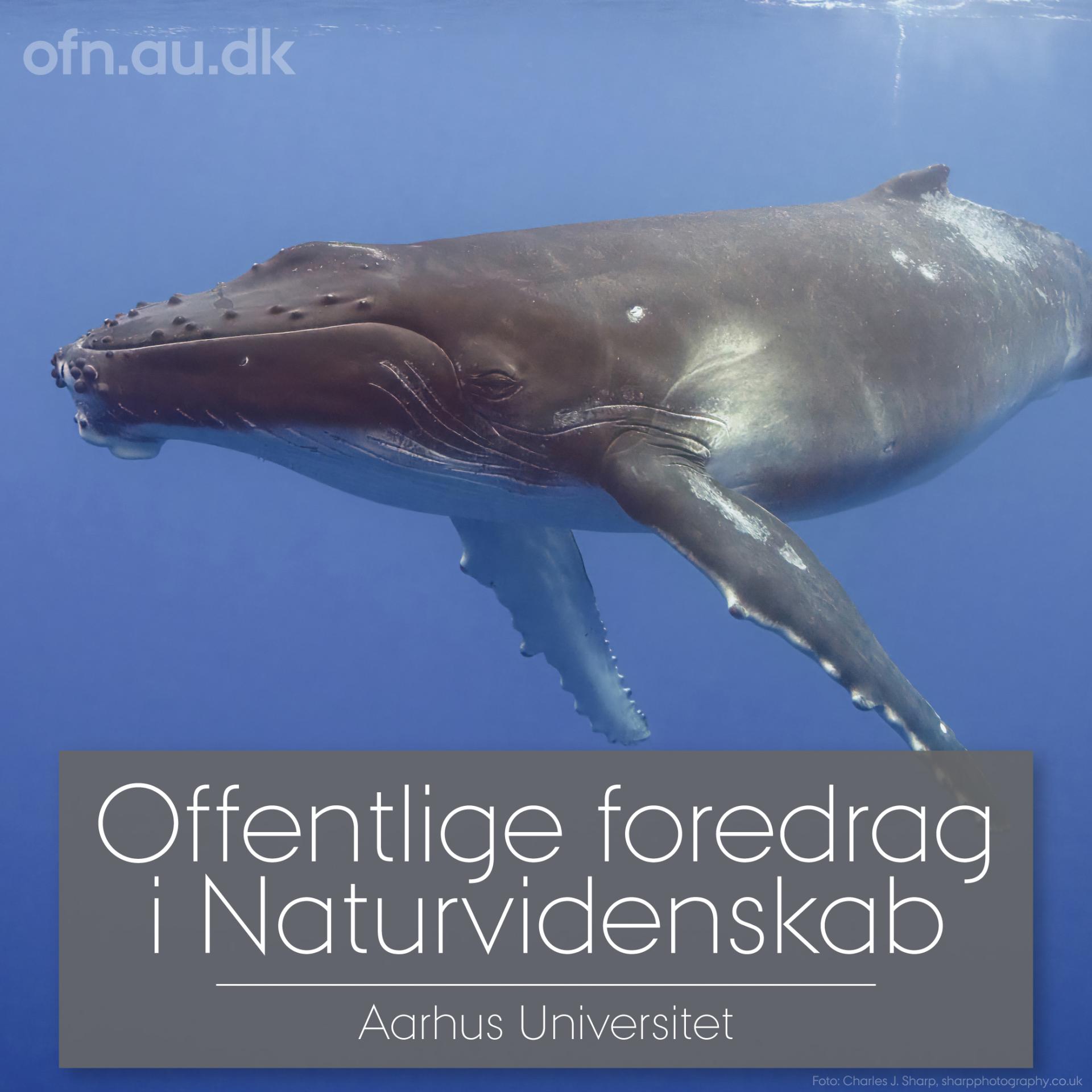
With the giants of the sea on the hunt – Live streaming from Aarhus University
SØNDERBORG: The world's oceans are home to the largest animals on Earth. Far out at sea, they have lived a hidden and secretive life until a few years ago. But new technology is giving scientists unique opportunities to study the whales as they hunt in the depths of the ocean.
Whales are the largest animals to have ever lived on Earth, and with their extreme adaptations to life in the water, they are some of the most unique mammals. They have been seen as floating oil reservoirs and hunted to near extinction, but today there is a growing understanding that marine ecosystems are completely dependent on whales as top predators.
For many years, scientists have only been able to gain insight into the lives of whales by studying them during the short time they are at the ocean surface or by dissecting dead whales and guessing how they live. But new technology, with drones and measuring equipment attached to the whales with suction cups, now gives scientists unique opportunities to study the biology of whales while they hunt at great depths far out at sea.
During the lecture, we will take the world's smallest whale, the porpoise, on a hunt in Danish waters, and with deep-sea cameras we will try to understand how the world's largest toothed whale, the sperm whale, finds food while hunting at a depth of more than 1.000 meters. You will also hear about how a bowhead whale avoids freezing to death while feeding on billions of tiny prey in Disko Bay, and how a humpback whale mother can give birth and nurse a calf without eating anything for six months. Along the way, we will also shed light on how we can live in sustainable coexistence with these important top predators in a changing world in the future.
SPEECHES
Peter Teglberg Madsen is a professor of sensory physiology at the Department of Biology at Aarhus University, where he is a world-leading researcher in whales' and bats' use of biosonar.
Public lectures in Natural Sciences
The lecture is part of the series "Public Lectures in Natural Sciences", which are lectures that are livestreamed from the Sea Auditoriums, Aarhus University. Here you have the opportunity to get closer to the latest discoveries and insights within natural sciences.
The level is high, and you will be challenged, but you can benefit from all lectures regardless of your academic background. Admission to all lectures is free.
You can ask questions to the lecturer during the lecture by sending a text message or tweet.
The lecture series is organized by Science and Technology, Aarhus University, and is offered in collaboration with hosts in a number of cities and the Carlsberg Foundation.
The event takes place here:
Sonderborg Library
The Hall, Nørre Havnegade 15, 6400, Sonderborg